

You own a car. You need cash. An instant title loan lets you borrow against your vehicle’s value without a lengthy credit review standing in the way. But half of providers don’t even publish their APR, so picking the wrong one can cost you far more than you expect. Here are nine providers worth knowing, ranked by transparency, speed, and borrower protections.
Disclaimer:EZ Car Title Loans is not a direct lender. APR and terms vary by lender and state. Defaulting on a title loan can result in vehicle repossession. This article is for informational purposes only and does not constitute financial or legal advice.
1. EZ Car Title Loans (Our Top Pick) , Fast Instant Title Loans
nn nn
EZ Car Title Loans is a lender-matching service that connects vehicle owners across multiple states with licensed lending partners. It is not a direct lender itself, which means you get to compare offers from several lenders before you commit to anything.
nn
What sets it apart from most of the market is transparency. Our research found that only about half of title loan providers disclose any APR at all. EZ Car Title Loans publishes rate ranges for qualifying borrowers and lets you keep driving your vehicle throughout the entire repayment period , a feature that only a third of surveyed lenders offer.
nn
The application takes minutes online. You enter your vehicle details (year, make, model, mileage) and basic contact information. A specialist then reviews your information and connects you with lenders who work in your state. Most applicants get a decision the same day, and funding can arrive within 24 hours via direct deposit or cash pickup at a partner location.
nn
Eligibility basics are straightforward: you need a lien-free title in your name, a valid government-issued ID, proof of income, and the vehicle available for a quick appraisal. No credit check is required , your borrowing amount is based on your car’s current market value, not your credit score. You can learn more about the EZ Car Title Loans application process and get a free pre-approval estimate directly on their site.
nn
The honest caveat: because EZ Car Title Loans works through a lending network, your exact APR and loan terms depend on which lender you’re matched with and the state you’re in. Always review the full loan agreement before signing.
nn
nn
2. Online Title Loan Providers, Quick Online Approval
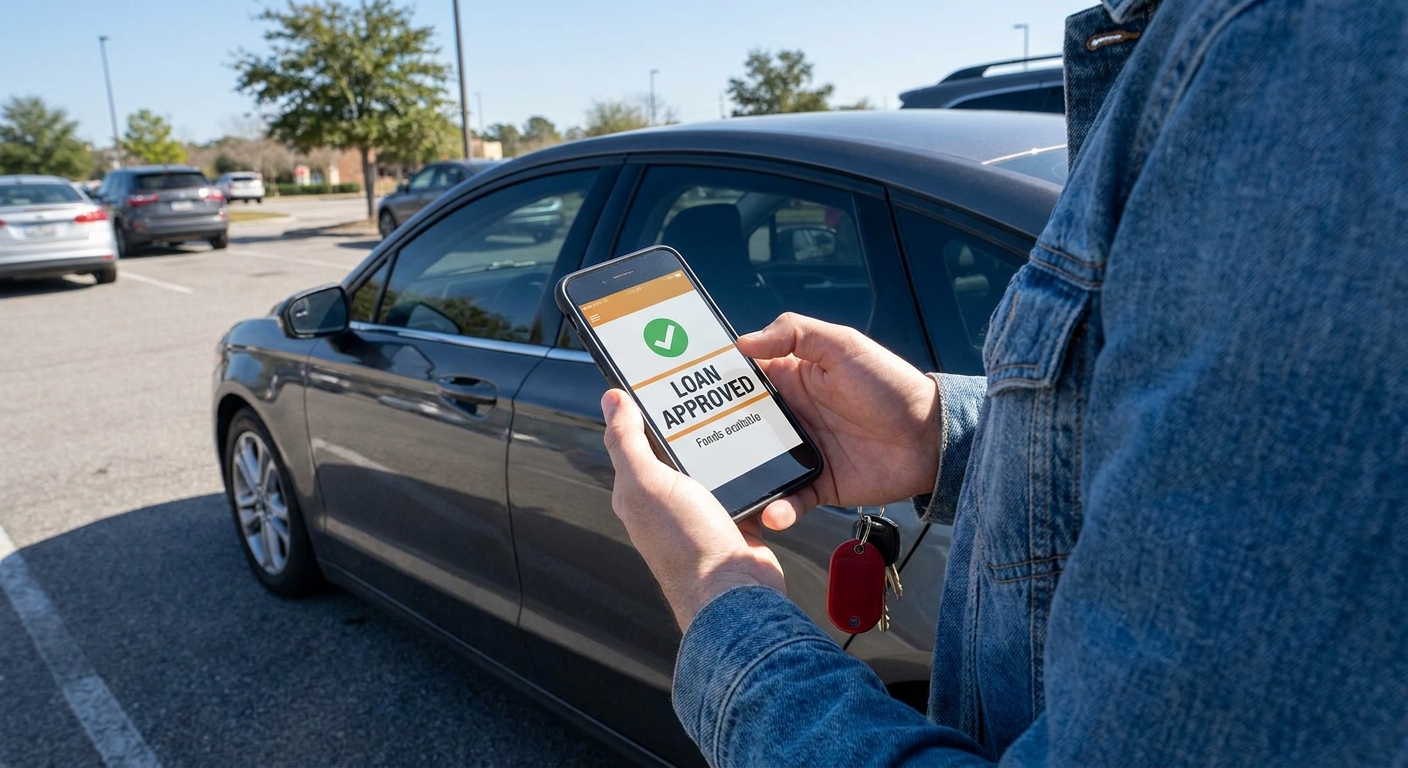
Online title loan providers target borrowers who want to start the process entirely online and finish it fast. The application is short, most people complete it in under ten minutes, and the platform routes your information to lenders who can return a decision quickly, often within the same business day.
Loan amounts vary by state and vehicle value. Lenders in this network typically lend 25% to 50% of a vehicle’s appraised value, which is the industry standard. You keep your car while you repay, and the title is returned to you once the balance is cleared.
The online‑first approach works well if you’re comfortable uploading documents digitally. Some borrowers, though, find that in‑person verification is still required at a local partner location before funds are released. If you need cash in hand the same day, check whether a physical location is near you before starting the application.
APR disclosure is inconsistent across lenders in this network, which is a real limitation. Ask specifically for the APR in writing before you agree to any offer. Short‑term title loans can carry APRs well above 100%, so the monthly payment can look manageable while the total cost of the loan is not.
3. Same‑Day Funding Options
Same‑day funding providers are built around one promise: get borrowers their money the same day they apply. For many people facing a genuine financial emergency, that speed is the deciding factor. These platforms work with lenders across multiple states, and loan limits vary significantly by location; borrowers may be eligible for higher amounts depending on vehicle equity and state regulations.
The process follows the same basic structure as most title lenders. You submit a short form with your vehicle details and personal information. A lender appraises the car (sometimes remotely via photos, sometimes in person). If approved, funds can arrive via direct deposit or cash pickup, depending on the lender and your location.
Same‑day funding is best for borrowers who apply early in the morning and have all their documents ready. Same‑day funding is genuinely possible, but it usually requires completing the appraisal and signing the loan agreement before early afternoon. Apply at 4 PM and you’re more likely looking at next‑business‑day funding.
One thing to watch: repayment terms on same‑day title loans are often short, sometimes as little as 30 days. If you can’t pay the full balance in that window, rollover fees can add up quickly. Before you sign, confirm whether the lender offers installment repayment options rather than a single balloon payment.
4. Title Loan Providers – Credit Considerations
Some title loan providers focus on borrowers who have been turned down elsewhere because of credit history. The pitch is simple: your car’s value, not your credit score, determines whether you qualify.
Title loans secured by your vehicle are one way around that barrier, because the collateral (your car) reduces the lender’s risk enough that a credit check becomes less relevant. These lenders focus instead on the vehicle’s appraised value and your ability to make payments.
Typical loan amounts run a portion of the vehicle’s current market value, often ranging from a quarter to half of that value. The appraisal considers the year, make, model, mileage, and overall condition of the vehicle. A car in poor mechanical shape or with high mileage will appraise lower.
The risk here is real and worth stating plainly: if you default, the lender can repossess your vehicle. That’s not a hypothetical, it’s how secured lending works. Only borrow what you’re confident you can repay within the loan term. If your income is irregular, look for a lender offering flexible installment plans rather than a 30-day single-payment structure.
5. Mobile App Instant Title Loans
Mobile app lenders position themselves as the mobile-first option in the title loan space. The entire application, from vehicle details to document upload to e‑signature, runs through a smartphone app. For borrowers who want to avoid in‑person visits entirely, this is a genuine advantage.
The vehicle appraisal is handled remotely. You submit photos of the car, the odometer reading, and the title. A representative reviews the submission and returns a loan offer, typically within a few hours. Funds are deposited directly to your bank account once you accept the offer and complete identity verification.
Mobile‑only processing does have a ceiling. Loan amounts through app‑based lenders tend to be lower than what you’d get from a lender who can inspect the vehicle in person. If you own a high‑value vehicle and want to borrow close to its maximum equity, an in‑person appraisal usually produces a higher offer.
Mobile app lenders work best for borrowers who need a moderate loan amount quickly and don’t want to take time off work to visit a physical location. The tradeoff is that remote appraisals can be conservative, so you may not get the full 50% of vehicle value that some in‑person lenders offer. Read the loan agreement carefully; app‑based lenders vary widely on repayment terms and early payoff policies.
6. Installment Repayment Plans
Most title loans are structured as 30‑day single‑payment loans. Installment‑based title loan providers are different. They work with lenders who offer installment‑based repayment schedules, spreading your payments over several months rather than demanding the full balance in one shot. For borrowers with steady but modest income, that structure is significantly more manageable.
Installment title loans carry their own cost considerations. A longer repayment term means you pay interest for more months, so the total amount you pay back can be higher than a short‑term loan, even if the monthly payment feels comfortable. Always calculate the total cost of the loan, not just the monthly payment, before you sign.
The eligibility requirements mirror the broader title loan market: lien‑free title in your name, valid ID, proof of income, and a vehicle available for appraisal. Credit history is not a primary factor. What lenders in this network care about is whether your income is sufficient to cover the monthly installment payments without putting you in a worse financial position.
If you’re managing other financial obligations alongside a title loan, say, rent, utilities, or insurance, flexible repayment can reduce the pressure of a single large payment. Speaking of protecting your assets: if you’re also reviewing your broader financial safety net, resources like an overview of umbrella insurance can help you understand what coverage options exist for unexpected liability beyond your vehicle.
This installment repayment option is not the fastest on this list. Processing installment loan paperwork takes a little longer than a simple 30‑day note. If you need cash today, look at options 1 through 3. If you need cash this week and want a repayment plan you can actually stick to, this option is worth considering.
7. High-Equity Title Loans, Up to 80% Vehicle Value
Most title lenders cap their loans at 50% of a vehicle’s appraised value. High-equity title loan options work with lenders willing to go higher, up to 80% of vehicle equity for qualifying borrowers with strong vehicles and documented income. That higher ceiling matters if you own a newer car or a truck with significant market value.
The tradeoff for higher loan-to-value ratios is tighter scrutiny. Lenders taking on more risk want to confirm that the vehicle is in good condition, that the income is real, and that the borrower has a realistic plan to repay. Expect a more thorough appraisal process than you’d get from a lender offering 25% to 30% of vehicle value.
Our research found that only one of six surveyed lenders publicly disclosed any loan-to-value limit, and that was a 50% cap. Most lenders hide this number entirely, which makes it hard to know how much you can actually borrow before you apply. These options address this by being upfront about higher‑LTV choices during the initial inquiry call.
High-equity loans carry higher repayment obligations. Borrowing 80% of a $12,000 vehicle means a $9,600 loan, and at typical title loan APRs, the monthly payment on that amount can be substantial. Only pursue a high‑LTV loan if your monthly income comfortably covers the payment with room to spare. Defaulting on a large title loan puts a high‑value asset at risk of repossession.
8. Phone-Based Instant Approvals
Phone-based title loan services handle approvals over the phone. You call in, speak with a loan specialist, and get a preliminary decision based on your vehicle details and income within minutes. There’s no app to download and no long online form, just a conversation that moves quickly.
Phone-based processing suits borrowers who aren’t comfortable with digital document uploads or who have questions they want answered by a real person before committing. A live specialist can walk you through the APR, the repayment schedule, and what happens if you need to pay early, all things that are easy to skim past in an online form.
The FTC has taken action against title lenders who deceptively advertised loan costs, which is a reminder that verbal promises during a phone call don’t replace written disclosures. Ask for the full loan agreement in writing before you sign anything, even if the phone conversation felt clear and straightforward.
These services work in a limited set of states. Before you call, confirm that the service operates in your state and that the lender is licensed there. State licensing matters because it determines which consumer protections apply to your loan, including whether there are APR caps, required waiting periods, or limits on rollovers.
9. Lien Options: First‑Lien vs. Second‑Lien
Most title loan providers require you to own your vehicle outright, meaning no existing loan on the car. Some lenders work with partners who offer both first‑lien and second‑lien title loans, which opens the door for borrowers who are still making payments on their vehicle.
Here’s the distinction. A first‑lien title loan means the title lender becomes the primary lienholder on your vehicle. You need a clear, lien‑free title for this. A second‑lien loan means the title lender takes a secondary position behind your existing auto lender. You can still qualify even if you haven’t paid off your car, but the loan amount is typically lower because the lender’s security position is weaker.
Second‑lien loans are a niche product. They make sense if you have significant equity in a vehicle you’re still paying off and need access to that equity without refinancing your primary auto loan. They’re not the right fit if you’re close to paying off the car; in that case, waiting until the title is clear and then applying for a standard first‑lien loan will usually get you better terms.
Industry analyses indicate that title loans of any type, first or second lien, typically carry much higher APRs than secured personal loans from banks or credit unions. If you have a credit union available to you, a share‑secured loan is almost always cheaper. The value of these options is access, not cost: they reach borrowers who have no other path to quick cash against their vehicle.
Instant Title Loan Comparison Table
The table below summarizes the nine providers across the factors that matter most to borrowers. Use it to narrow your shortlist before you apply anywhere.
A few things the table can’t capture: state availability changes frequently, and APR ranges in the title loan market span from roughly 126% to over 300% depending on the lender and state. Our research found that the average disclosed APR across surveyed providers was approximately 242% , which underscores why comparing offers before signing is so important. Always request the full Truth-in-Lending disclosure and read it before you accept any offer.
How to Choose an Instant Title Loan Provider
nn
Speed is not the only thing that matters. Here’s a short checklist to run through before you apply anywhere:
nn
- n
- Ask for the APR in writing.A monthly rate of 25% sounds small. Annualized, that’s 300%. Always convert to APR before comparing offers.
- Confirm the lender is licensed in your state.State licensing determines which consumer protections apply. Unlicensed lenders may bypass your state’s APR caps entirely.
- Check the repayment structure.A 30-day balloon payment is very different from a 6-month installment plan. Make sure you can actually meet the payment schedule before you sign.
- Ask about early payoff fees.Our research found that the only disclosed early payoff fee across surveyed lenders was “none.” But confirm this in writing , some lenders bury prepayment penalties in the fine print.
- Understand the repossession timeline.Most title loan contracts allow repossession as soon as you miss a payment. Some states require a notice period; many do not. Know what happens before you default, not after.
- Compare at least two offers.A lender-matching service like EZ Car Title Loans lets you see multiple offers side by side, which is a much safer starting point than applying to a single lender and accepting whatever they offer.
n
n
n
n
n
n
nn
FAQ
nn
What do I need to qualify for an instant title loan?
n
You generally need a lien-free vehicle title in your name, a government-issued photo ID, proof of income, and the vehicle available for a quick appraisal. Some lenders also require proof of residence and current vehicle registration. Credit history is rarely a deciding factor , approval is based primarily on what your car is worth and your ability to repay the loan.
nn
How much can I borrow against my car title?
n
Most lenders offer 25% to 50% of your vehicle’s current appraised value. If your car is worth $8,000, you might qualify for $2,000 to $4,000. Some lenders go higher , up to 80% for high-value vehicles with strong income documentation. The appraised value depends on the year, make, model, mileage, and condition of the car.
nn
Can I get a title loan with bad credit?
n
Yes. Title loans are secured by your vehicle, so most lenders don’t run a traditional credit check. Your credit score has little or no impact on approval. What matters is that you own the car with a clear title and can demonstrate some ability to repay. That said, bad credit doesn’t mean you should skip comparing offers , APR still varies widely between lenders.
nn
Will I lose my car if I take out a title loan?
n
You keep driving your car throughout the loan term , the lender holds a lien on the title, not the vehicle itself. However, if you default on the loan, the lender has the legal right to repossess the vehicle. This is the primary risk of any title loan. Only borrow what you’re confident you can repay, and act early if you’re having trouble making payments.
nn
Are title loans legal in my state?
n
Title loans are legal in many states but heavily regulated or outright prohibited in others. States set their own APR caps, repayment rules, and licensing requirements. Before you apply, confirm that the lender is licensed in your state and review your state’s consumer finance regulations. Your state attorney general’s office or financial regulator website is the best place to check current rules.
nn
What’s the difference between a first-lien and second-lien title loan?
n
A first-lien title loan requires a clear, lien-free title , meaning you own the car outright. The title lender becomes the primary lienholder. A second-lien loan lets you borrow against a vehicle you’re still paying off, with the title lender taking a secondary position behind your existing auto lender. Second-lien loans typically have lower maximums and stricter terms because the lender’s security position is weaker.
nn
Conclusion
nn
If you need an instant title loan, start with a provider that shows you multiple offers before you commit , that’s exactly what EZ Car Title Loans is built to do. Get your free pre-approval estimate, compare the offers you receive, and read the full loan agreement before you sign. The right loan is the one you can actually pay back without losing your car in the process.


