

Most lenders that advertise a “low interest title loan” don’t publish their APR upfront. Our research found average APRs sitting around 40%, with some lenders going above 50%, which is a long way from the “low” label in the marketing. Here are the five best options right now, what makes each one worth considering, and the honest caveats you need before you sign anything.
Disclaimer:EZ Car Title Loans is not a direct lender. APR and terms vary by lender and state. Defaulting on a title loan puts your vehicle at risk of repossession. This article is for informational purposes only and is not financial or legal advice.
1. EZ Car Title Loans (Our Top Pick) , Fast Approval & Flexible Rates
EZ Car Title Loans is a loan-matching platform that connects vehicle owners with licensed title lenders across multiple states. It’s not a direct lender, which means the APR you get depends on the lender in your state. But that setup is actually an advantage: you compare offers instead of taking the first number a single storefront gives you.
The platform has a free online title loan estimator. You enter your vehicle details and get a rough idea of what you could borrow before anyone runs a check or contacts you. That kind of upfront transparency is rare in this market. Funds are typically available within 24 hours, and you can pick up cash in person or get a direct deposit, whichever works for your situation.
Support runs 24/7, which matters when you’re dealing with an urgent expense on a Saturday night. Loan amounts vary based on your vehicle’s value and eligibility, and you keep driving your car throughout the entire loan term.
The honest caveat: because EZ Car Title Loans matches you with lenders rather than lending directly, the final APR and terms depend on what lenders in your state offer. Always read the full disclosure before signing. If you’re in Nevada, for example, borrowers can access Las Vegas car title loans with flexible repayment plans through the platform’s lender network.
2. TitleMax , Nationwide Network with Competitive APR
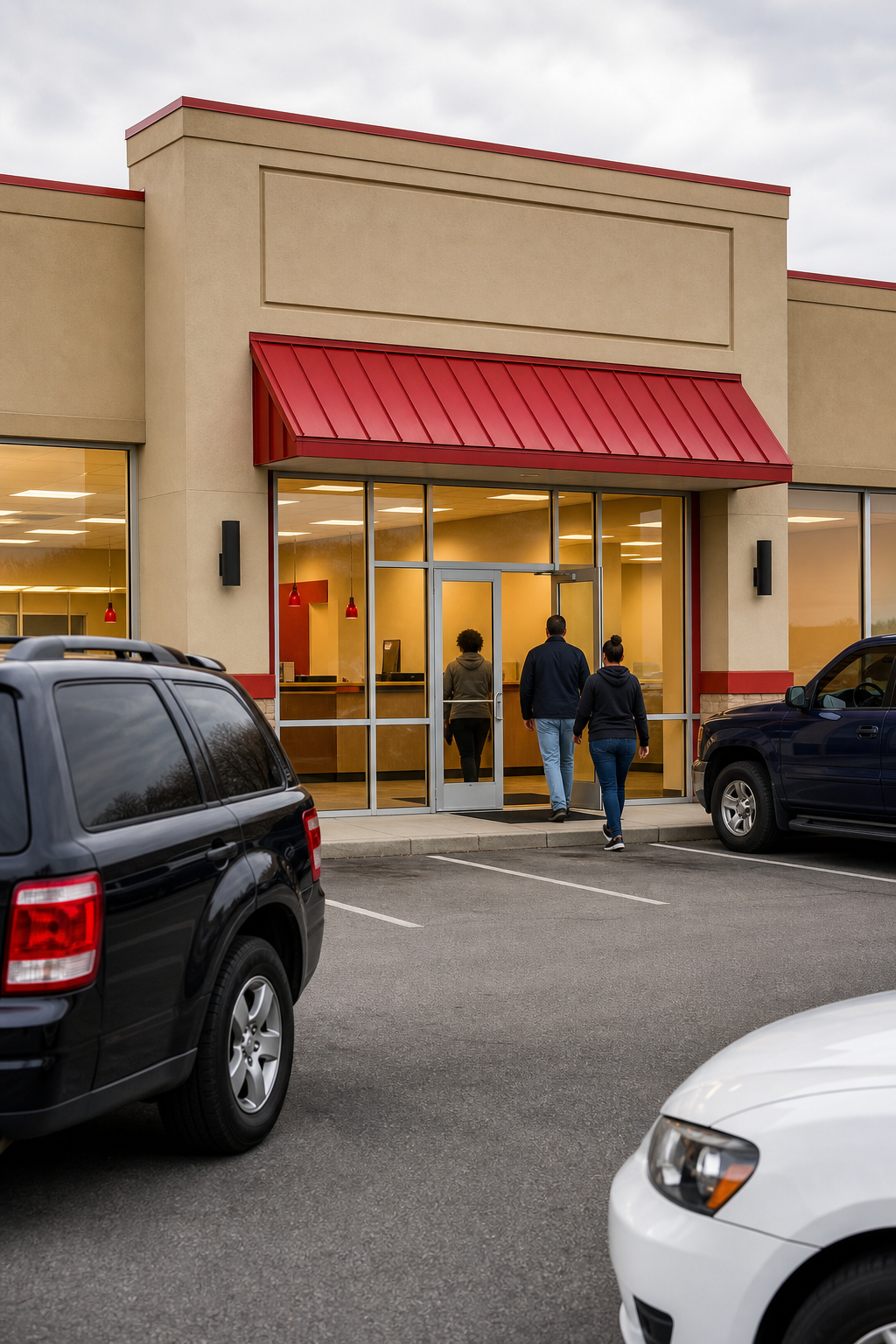
TitleMax has over 1,000 locations across 16 states and has been issuing title loans since 1998. The sheer physical footprint means that if you prefer to handle things in person, there’s likely a branch nearby. They process a high volume of loans daily and can get you approved in as little as 30 minutes at a store.
TitleMax offers car title loans up to larger amounts and uses an all-credit-welcome policy. The loan amount depends on your vehicle’s value and your ability to repay, not your credit score. They also offer motorcycle title loans and, in Georgia stores, title pawns. If you already have a title loan elsewhere, TitleMax says they’ll pay it off and cut your rate in the process.
The APR picture is less clean. Research data shows TitleMax notes that APRs can climb above 50% in some cases, which contradicts the “competitive” framing they use in marketing. Their Customer Portal lets you manage payments from your phone, and they have a text reminder program to help you stay on track. That’s useful, but it doesn’t change the underlying cost.
Worth knowing: TitleMax stopped offering new loans in Illinois as of March 2021, so coverage is uneven. Check availability in your state before you drive to a branch.
3. Online Title Loan Providers, Simple Online Application
Online title loan providers target borrowers who want to start the process online without walking into a branch first. The application is straightforward: basic vehicle details, contact info, and you’re in the queue. It’s designed to reduce friction at the front end of the process.
Loan amounts and terms vary by state, vehicle value, and your ability to repay. Like most title lenders, the provider requires a lien‑free title, a government‑issued ID, and proof of income. You keep driving your vehicle while you repay. Same‑day cash is available at participating locations after approval.
The limitation here is transparency. The provider doesn’t publicly disclose a specific APR range on their main pages, which makes it harder to compare them against other lenders before you start the application. That’s a gap worth flagging. You’ll need to complete the process to get real numbers, and by then you may feel committed.
If speed and a simple digital entry point matter to you, the provider is worth a look. But go in knowing you’ll need to ask directly for the full APR, not just the monthly rate.
4. Low Minimum Loan Amount Options

Some lenders fit borrowers who need a smaller amount quickly and don’t want to over‑borrow. Minimum loan amounts in this category typically start at a few hundred dollars, which is useful if your emergency is a shortfall of a few hundred dollars rather than a multi‑thousand‑dollar gap.
Loan amounts in the title loan market are generally set at 25% to 50% of your vehicle’s value. For a car worth $4,000, that’s a loan range of roughly $1,000 to $2,000. These lenders often sit in the lower end of that range by design, which can mean smaller total interest costs if you pay off quickly.
Repayment terms are typically 15 to 30 days on short‑term title loans, though some lenders offer installment structures over three to six months. Shorter terms mean less total interest but a bigger single payment. Make sure you know which structure applies before you sign.
The caveat: lenders in this category often omit early‑payoff fee disclosures. Only one lender in our research (LoanMart) explicitly states a $0 fee for early repayment. If paying off early is your plan, ask specifically whether there’s a prepayment penalty. If they can’t answer clearly, that’s a signal to look elsewhere. Protecting your financial picture matters as much as protecting your home, which is why consumers in other categories also compare homeowners insurance in Los Angeles carefully before committing to any financial product.
5. Online Title Loan Provider, Quick Funding for Urgent Needs
The platform is built around one thing: getting money to you fast. The process starts with a vehicle appraisal, and once you’re approved, you drive away with cash. Loan amounts vary by state, with some states offering a high amount depending on vehicle value and eligibility.
The platform is available in multiple states, and availability limits vary by location. Arizona, for example, has a range starting at a low amount up to a high amount. Other states cap lower. Check your state’s specific limits before applying, because the number you see in a national ad may not apply where you live.
Repayment terms can extend beyond 90 days and may be as long as several years, which is longer than many storefront title lenders offer. That extended term can lower your monthly payment, but it also means more total interest paid over time. Run the math both ways before you decide which term length actually saves you money.
The platform may receive compensation from lenders, so treat its recommendations as a starting point rather than a final answer. APR, fees, and final terms vary by lender. The site’s own disclaimer notes that not all applicants will qualify for representative examples shown.
What to Look For When Choosing a Low Interest Title Loan
The phrase “low interest” in title lending is often marketing language rather than a regulated category. Our research found that even the better options in this market carry average APRs around 40%, with some lenders exceeding 50%. Knowing what to check before you apply makes a real difference.
Here’s what actually matters:
- Published APR range:If a lender won’t show you an APR before you apply, that’s a red flag. The APR is required by federal Truth in Lending law to be disclosed before you sign, but the timing matters. Get it in writing early.
- Loan-to-value (LTV) cap:Most lenders offer 25% to 50% of your vehicle’s value. Only one lender in our research explicitly capped LTV at 50%. If a lender promises more, ask what their ceiling is and how they calculate your vehicle’s worth.
- Early payoff fees:Most lenders don’t disclose these upfront. Ask directly. If you plan to pay off early, a hidden prepayment penalty erases any interest savings.
- State coverage:Title loan laws vary sharply by state. Some states cap APR, others have no cap at all. Florida law, for instance, caps title loan interest at 30% per year on the first $2,000 borrowed. Your state may be very different.
- Repossession risk:If you default, the lender can repossess your vehicle. That’s not a fine‑print detail. It’s the core risk of any title loan, and it should factor into your decision before you borrow.
Geographic coverage is also uneven across providers. Some lenders serve 30 states; others provide no state-level detail at all, which makes it hard to know if you’re even eligible before you start an application.
Comparison of Low Interest Title Loan Options
The table above shows one consistent pattern: most providers don’t publicly disclose their full APR range or early payoff terms. That’s the transparency gap borrowers face in this market. The safest move is always to get the full APR in writing before you commit to any lender.
FAQ
What is a realistic APR for a low interest title loan?
In practice, even the better title loan options carry APRs between 30% and 50%, with some lenders going higher. The market average in our research sits around 40%. True low-rate title loans are rare. If a lender advertises a very low rate without disclosing the full APR in writing, ask for the complete cost breakdown before signing anything.
Can I get a title loan with bad credit?
Yes, in most states where title loans are legal. Lenders focus on your vehicle’s equity and your ability to repay, not your credit score. A borrower with poor credit can still qualify if the car has enough value and the state permits title lending. Approval is not guaranteed, but bad credit alone rarely disqualifies you when a lien-free vehicle is involved.
How much can I borrow against my car’s title?
Most title lenders offer between 25% and 50% of your vehicle’s current market value. So a car worth $6,000 might support a loan of $1,500 to $3,000. The exact amount depends on your vehicle’s condition, mileage, and the lender’s own LTV cap. Some platforms like EZ Car Title Loans connect borrowers with lenders offering up to $10,000 for qualifying vehicles.
What happens if I can’t repay my title loan on time?
If you miss a payment or can’t repay by the due date, the lender may offer a rollover, extending the term but adding more fees and interest. If you default entirely, the lender has the right to repossess your vehicle. Act early if you’re struggling. Contact the lender before a payment is missed, not after, to discuss your options and avoid repossession.
Are title loans legal in every state?
No. Title loan laws vary sharply by state. Some states cap interest rates, some require specific licensing, and others prohibit title loans entirely. Before applying, check your state’s regulations. Your state attorney general’s office or state financial regulator can confirm what’s allowed where you live. Always verify a lender is licensed in your state before providing any personal information.
Is there a fee to pay off a title loan early?
Most lenders don’t disclose early payoff fees upfront. In our research, only one provider explicitly stated a $0 prepayment penalty. Always ask this question directly before signing. If you plan to pay off early, a hidden fee can cancel out any interest savings. Get the answer in writing as part of your loan agreement review.
Conclusion
nn
If you need cash secured by your vehicle, start with EZ Car Title Loans. The free online estimator, 24/7 support, and lender-matching approach give you a real comparison before you commit to any terms. Whatever lender you choose from this list, get the full APR in writing and have a repayment plan ready. Visit EZ Car Title Loans to start a free estimate and see what you qualify for today.


