

Your car title can do more than prove you own a vehicle. It can also get you cash, often within hours, without selling the car. The catch is that not every lender offers the same deal, and the difference between a fair rate and a predatory one can be enormous. Here are the top ways to get a secured loan with your car title, and who each option actually suits.
1. EZ Car Title Loans , Our Top Pick for Fast, Transparent Title Lending

EZ Car Title Loans is a loan-matching platform that connects vehicle owners with state-licensed title lenders across multiple US states. It is not a direct lender, which matters because it means APR and terms depend on the matched lender and your state’s rules. That said, the platform publicly discloses its APR range and available loan amounts, with repayment terms running from 91 days all the way to 70 months.
It’s best for borrowers who want to compare offers quickly without committing. The online application takes minutes. Lenders evaluate your vehicle’s equity rather than your credit score, and you keep driving your car throughout the loan term. There are no prepayment penalties if you pay it off early.
The honest caveat: because EZ Car Title Loans is a matching platform, your actual rate depends on which lender you’re paired with and which state you live in. Same-day funding is available for approved borrowers, but results vary. If you want fast approval and a transparent process, this is where to start.
Online title lenders let you complete the entire process from home. You upload photos of your car, submit documents digitally, and get a quote without stepping into a store. Some lenders can fund the loan the same business day via direct deposit.
2. Online Title Loan Lenders , Convenience With Competitive Terms
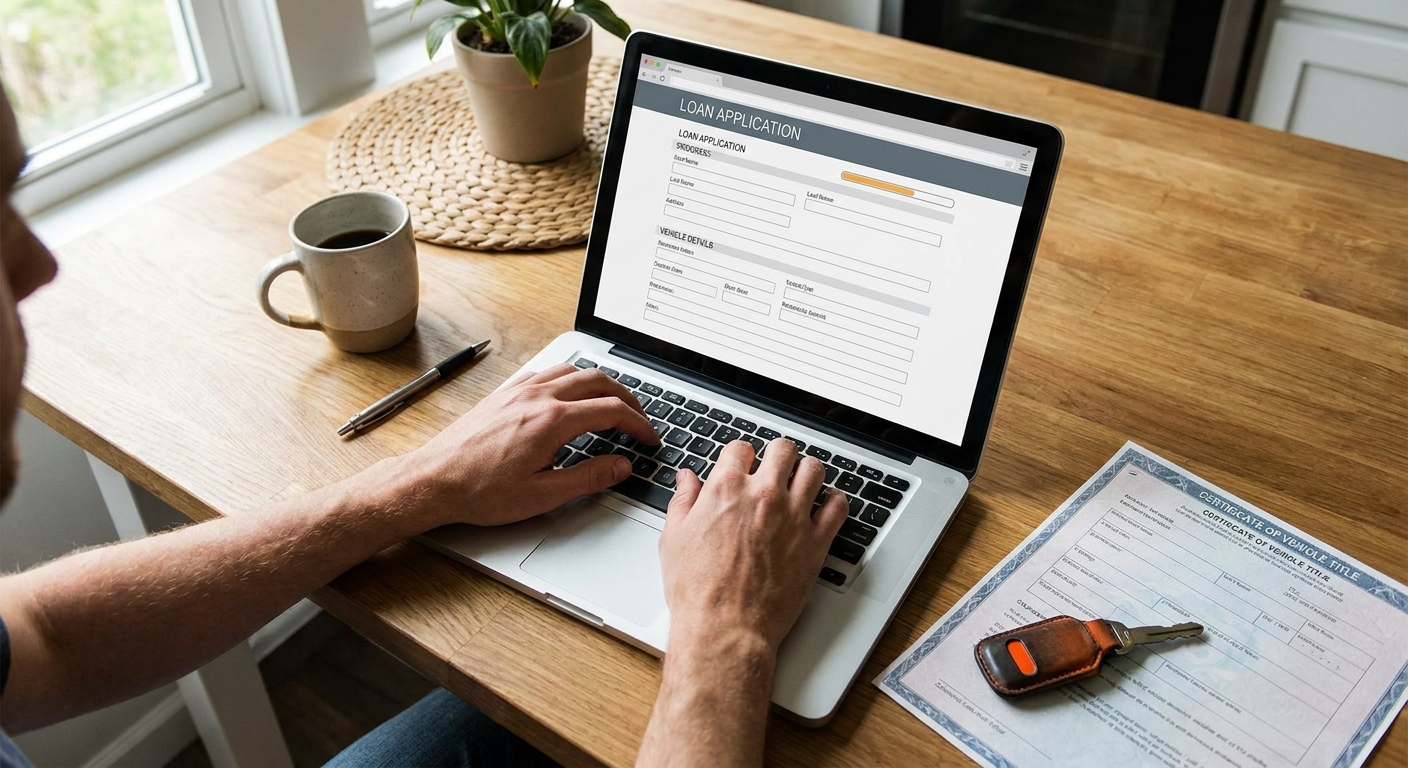
Online title lenders let you complete the entire process from home. You upload photos of your car, submit documents digitally, and get a quote without stepping into a store. Some lenders can fund the loan the same business day via direct deposit.
The tradeoff versus in-person lenders is that you cannot negotiate face-to-face, and some online lenders operate across state lines in ways that make it harder to verify licensing. Borrowers should confirm that any lender is licensed in their state and read the full APR disclosure before signing, since title loans can carry significant monthly finance fees that add up to a high effective annual rate at unregulated lenders.
Online title lending works best if you live in a state with strong consumer protections and you’ve already verified the lender’s license. If the lender can’t tell you their APR upfront, that’s a reason to stop.
3. Credit Union Auto Equity Loans , Lower Rates for Members
Credit unions are member-owned, which means they typically charge far less than storefront title lenders. Broadview Federal Credit Union, for example, lists auto loan APRs as low as 5.49% with a ceiling of 14.99%. Navy Federal Credit Union offers terms from 36 to 72 months on auto-secured loans, comparable to what the more flexible title loan providers offer.
The key difference from a traditional title loan is that credit unions run a credit check and verify income. If your credit is thin or damaged, you may not qualify. But if you do, the savings are real. Borrowing at a credit union rate instead of a high-interest title loan rate can mean significantly less in interest paid over the life of the loan.
Credit union auto equity loans are best for members with at least fair credit who own their vehicle outright. Membership requirements vary by institution, so check eligibility before you apply. If you don’t belong to one yet, many credit unions allow anyone in a given geographic area to join for a small fee.
4. Brick-and-Mortar Title Pawn Shops , Same-Day Cash With In-Person Inspection
Physical title pawn shops handle everything in person. A staff member inspects your vehicle, reviews your title and ID, and can often put cash in your hand within 30 minutes. For borrowers who prefer a face-to-face transaction, or who don’t have reliable internet access, this is still the fastest route.
The concern with storefront title pawn shops is cost. Some charge monthly fees that translate to annual percentage rates that can be very high, and title loans at these lenders often run 15- to 30-day terms with automatic rollover options that pile on new fees each cycle. If you cannot repay on the original due date, fees accumulate quickly and the total cost of borrowing rises significantly with each rollover.
Use a brick-and-mortar shop only when speed is the priority and you’re confident you can repay on the original due date. Always ask for the APR in writing before you sign. Under federal law, lenders must disclose the APR and total finance charge before you commit.
5. Traditional Bank Auto Equity Loans , Best for Borrowers With Strong Credit
Banks offer secured auto equity loans to customers with solid credit histories. The process takes longer, often several business days, but the rates are meaningfully lower than what most title lenders charge. Some banks will also consider income, existing relationships, and debt levels, which can work in your favor if you have a steady paycheck and an established account.
This option won’t work for borrowers with poor credit. Banks use credit checks, and a low score typically means a denial or a rate so high it loses its advantage. Auto equity loans from banks also tend to require full ownership of the vehicle, meaning no existing lien from a car loan.
If you have a credit score above 680 and a clear title, calling your bank first costs nothing and could save you a lot in interest. Just ask specifically about auto equity loans secured by the vehicle’s title, since not all bank branches offer them and some may redirect you to unsecured personal loans instead.
6. Peer-to-Peer Lending Platforms , Alternative Secured Loans Against Your Vehicle
Peer-to-peer (P2P) lending platforms connect borrowers with individual investors rather than banks. Some platforms accept vehicles as collateral for secured personal loans, which can make them accessible to borrowers who don’t qualify at credit unions or banks. P2P lenders often report payments to credit bureaus, so on-time payments can gradually improve your credit score.
Rates vary widely depending on the platform and your credit profile. Some P2P lenders cap APRs at 35.99%, which is much better than storefront title loan shops. However, not every platform accepts vehicle titles as collateral for personal loans, so you’ll need to confirm that before applying. Funding is usually faster than a bank but slower than a same-day title loan.
P2P lending is worth exploring if you have fair-to-good credit and want a longer repayment window than most title loan shops offer. The main risk is that rates at the high end of some P2P platforms still exceed what credit unions charge, so comparison shopping across two or three platforms is worth the extra hour before committing.
7. Title Loan Refinancing Providers , Pay Off or Restructure an Existing Title Loan
If you already have a title loan with terms you can’t sustain, refinancing is one way out. Some providers specialize in paying off an existing title loan and replacing it with a new loan at a lower rate or with a longer repayment window. ing on title loan exits, it’s also possible to negotiate directly with your current lender for a lower rate, a payment extension, or a modified term, especially if you contact them before you miss a payment.
Rolling over a title loan can create a very difficult situation for borrowers who are already struggling to repay, because each rollover adds new fees to the same original balance.
Refinancing providers can sometimes reduce your monthly payment, but be careful about extending the term so much that you pay far more in total interest. Get the new terms in writing, confirm there are no prepayment penalties, and compare the total cost of the new loan against what you currently owe. EZ Car Title Loans also connects existing borrowers with lenders who may offer refinancing options, which is worth checking if your current rate is unsustainable.
8. State-Licensed Title Lenders , Know the Laws Where You Live
Title loan availability and terms are set largely at the state level. Some states ban title loans entirely. Others cap interest rates, limit rollover cycles, or require lenders to assess a borrower’s ability to repay. Federal rules covering vehicle title loans operate as a minimum floor, but states can layer additional protections on top.
Before you borrow, look up your state’s rules. Check whether the lender holds a current license with your state’s financial regulator. A licensed lender in a regulated state is a meaningfully safer option than an unlicensed lender, because state regulators can investigate complaints and revoke licenses. If a lender can’t show you a license number or avoids the question, that’s a firm red flag.
Military borrowers may have extra protection under federal law. Active duty service members and their dependents should confirm with their installation’s legal assistance office what rate caps and protections apply to vehicle title loans in their situation, as federal law places limits on certain loan products offered to this group.
9. Lenders That Accept Cars With an Existing Lien , Borrowing Against a Partially Paid Vehicle
Most standard title loan lenders require a lien-free title. That means you must own the vehicle outright with no remaining car loan balance. But some lenders will work with borrowers who have significant equity in a vehicle they’re still paying off. The lender evaluates the remaining balance versus the car’s current market value and may offer a loan based on the equity gap.
This is less common than standard title lending, and the terms are often stricter. A few states, including Virginia and Nevada, specifically permit title loans on vehicles with an existing lienholder if that lienholder approves. In most other states, you’ll need to either pay off the existing loan first or look for a lender that structures the deal differently, such as through a secured personal loan against the vehicle’s equity.
If your car isn’t fully paid off, ask any potential lender directly whether they work with lien vehicles before you go through the application process. It saves time. If the answer is no, the cleaner path is paying down the existing loan until you own the vehicle free and clear, then applying for a title loan.
10. Reputable Lenders vs. Predatory Title Lenders , Red Flags to Avoid
The difference between a legitimate lender and a predatory one often comes down to a handful of signals you can check before signing anything. Some storefront title lenders charge very high interest rates, and the gap between what reputable and predatory lenders offer borrowers can be significant.
Red flags to watch for:
- No APR disclosed before you sign. Federal law requires disclosure.
- Pressure to sign quickly or claims that the offer expires in minutes.
- No state license number or evasiveness when you ask for it.
- Automatic GPS tracking or starter interrupt devices installed on your vehicle as a loan condition.
- Rollover terms written into the loan contract without your explicit agreement.
- No written explanation of what happens if you miss a payment.
Reputable lenders tell you the APR, the total cost of the loan, the exact repayment schedule, and the consequences of default. They’re licensed in your state. They don’t promise approval before seeing your documents. EZ Car Title Loans connects borrowers only with state-licensed lenders and publishes its APR range upfront, which is the baseline transparency any honest provider should offer.
What to Look for When Choosing a Secured Title Loan
Before you choose a lender, compare these factors side by side. A low monthly payment isn’t the same as a low-cost loan.
One more thing worth knowing: a title loan can affect your credit score. If the lender reports to the major credit bureaus, a hard inquiry may lower your score slightly at application. More importantly, a repossession, if you default, can stay on your credit report for seven years. On-time payments, by contrast, can help build credit history over time. Ask your lender whether they report to the major credit bureaus before you sign.
For small business owners or entrepreneurs who need fast working capital, a secured car title loan can fund short-term needs while a longer-term financing plan comes together. Resources like this founder’s breakdown of bootstrapping 30 apps in 30 days show how fast-moving projects often need equally fast access to capital before revenue catches up.
FAQ
What documents do I need for a secured loan with my car title?
You typically need your vehicle title in your name with no outstanding lien, a government-issued photo ID, proof of residence, proof of insurance, and some form of income verification. Income can come from employment, Social Security, disability payments, or other consistent sources. Some lenders also want a current vehicle registration. Having these ready before you apply speeds up approval significantly.
How much can I borrow against my car title?
Most lenders offer between 25% and 50% of your vehicle’s current market value. So if your car is worth a certain amount, you might borrow a portion of that value based on your equity and the lender’s assessment. EZ Car Title Loans connects borrowers with lenders offering a range of loan amounts depending on vehicle equity and state. The car’s make, model, mileage, and condition all affect the final offer.
Can I get a title loan if my car isn’t fully paid off?
In most states, lenders require a lien-free title, meaning you must own the vehicle outright. A few states allow title loans on partially paid vehicles if the existing lienholder approves. If your car still has a loan balance, you’d need significant equity and a lender willing to work around the existing lien, which is uncommon. Check your state’s rules and ask any lender directly before applying.
What happens to my credit if I take out a title loan?
It depends on whether your lender reports to credit bureaus. If they do, on-time payments can gradually help your credit history. A missed payment or default can hurt your score. A repossession can stay on your credit report for seven years. Ask your lender upfront whether they report to the major credit bureaus so you know what’s at stake before signing.
Are title loans legal in my state?
Title loan availability varies by state. Some states ban them outright; others allow them with rate caps or consumer protections. Check with your state’s financial regulator or attorney general’s office to confirm whether title lending is permitted where you live and what rules apply. Any lender operating in your state should hold a current state license, which you can usually verify through the regulator’s website.
What’s the safest way to borrow against my car title?
Start by checking whether a credit union auto equity loan is available to you. Rates there are far lower than most title loan shops. If you don’t qualify, use a transparent matching platform like EZ Car Title Loans, verify the matched lender’s state license, read the full APR and rollover policy before signing, and borrow only what you can repay on the original due date. Never sign a contract with a blank or undisclosed APR field.
Conclusion
If you need to borrow against your vehicle, start with the option that fits your credit and your state’s rules. Credit union members should check auto equity rates first. Everyone else should compare offers through a transparent platform before committing. EZ Car Title Loans gives you a fast way to see what state-licensed lenders will offer based on your vehicle’s value, with no prepayment penalties and a disclosed APR range. Visit ezcartitleloans.com to get a free estimate and see what you qualify for before you decide.


