

Bad credit doesn’t automatically close the door on borrowing against your car’s value. Title loans are secured by your vehicle, so lenders focus on what your car is worth, not just your credit score. Here are the six best options to consider right now, plus one alternative category, and what you should watch for before you sign anything.
1. EZ Car Title Loans (Our Top Pick) , Bad Credit Welcome, No Guarantee

EZ Car Title Loans is a loan-matching platform that connects borrowers with licensed title loan lenders. It is not a direct lender, which means the APR and exact terms you get depend on the lender in your state. That distinction matters, and EZ Car Title Loans is upfront about it.
What sets it apart for people with bad credit is the qualification structure. Instead of running a hard credit check first, the platform connects you with lenders that evaluate your vehicle’s equity as the primary factor. A borrower who can’t pass a bank’s credit threshold may still qualify based on a verified car value.
Loan amounts range from $500 to $55,000. APR runs between 5.99% and 35.99% for qualifying borrowers. Repayment terms extend from 91 days up to 70 months, and there are no prepayment penalties. You keep driving your car throughout the loan term, which is a core part of how the platform works.
The application takes minutes online. If you’d rather talk to someone in person, that option exists too. EZ Car Title Loans covers cars, trucks, and motorcycles, and it has been expanding its licensed lender network across the US, with a notable platform launch in Texas in early 2026.
The honest caveat: approval is not guaranteed. Every lender on the platform has its own underwriting rules. Your vehicle’s condition and your state’s title loan laws both affect what you actually qualify for. Visit ezcartitleloans.com to check eligibility and start the process.
2. Traditional Bank Auto Equity Loans , Lower APR, Stricter Credit Rules
Banks offer secured personal loans and auto equity products that use your vehicle as collateral. The big advantage: APR is often much lower than what a typical title loan charges. A secured bank loan might land you under 20% APR versus the triple-digit rates common with short-term title lenders.
The catch is obvious. Banks want a credit check. They want income verification. They want your debt-to-income ratio to look acceptable. If your credit score is in subprime territory (below 660), most traditional banks will decline you outright or offer a rate that barely beats a title loan anyway.
Some banks have carved out programs specifically for credit-challenged borrowers. These products tend to require proof of stable employment (typically three or more months at a current job) and may include additional requirements like GPS device installation on the financed vehicle. The trade-off is a more workable interest rate and a longer repayment window.
According to Experian’s comparison of title loans and secured personal loans, secured loans from traditional lenders typically carry terms of two to five years and APR capped at 35.99%, compared to title loans that can run 300% APR or higher. That cost gap is real and worth pursuing if your credit situation allows it.
This option is best for borrowers who have patchy credit but can document steady income. If your credit score is below 580, a traditional bank is probably a dead end. But if you’re in the 580, 650 range with a clean employment history, it’s worth one application before turning to a title lender.
3. Credit Union Share-Secured Loans , Community Lenders for Poor Credit
Credit unions are member-owned, which changes how they handle risk. They’re not trying to maximize profit on every loan. That means they’re more willing to look at the full picture of a borrower, not just a three-digit score.
Share-secured loans let you borrow against money you already have on deposit at the credit union. The rate is typically very low (often in the 3, 8% range) because the lender holds your own savings as collateral. It’s a usable tool for building or rebuilding credit while accessing cash you need now.
If you don’t have savings on deposit, many credit unions still offer small-dollar personal loans and auto equity products with far softer credit requirements than banks. Some have specific “fresh start” programs for people working through past credit issues, and approval often happens within the same business day.
The limitation is membership. You need to qualify to join the credit union, which often means living in a specific area, working for a certain employer, or belonging to a particular association. Online credit unions have opened this up considerably, but it still requires a step before you can borrow.
If you’re in a position to plan ahead even slightly, joining a credit union and opening a small savings account now gives you a much cheaper borrowing option down the road. For someone in an acute cash crunch today, this may be too slow. But for someone who can wait a week or two, it’s worth the paperwork.
4. Online Title Loan Lenders , Fast Funding, High APR Risk
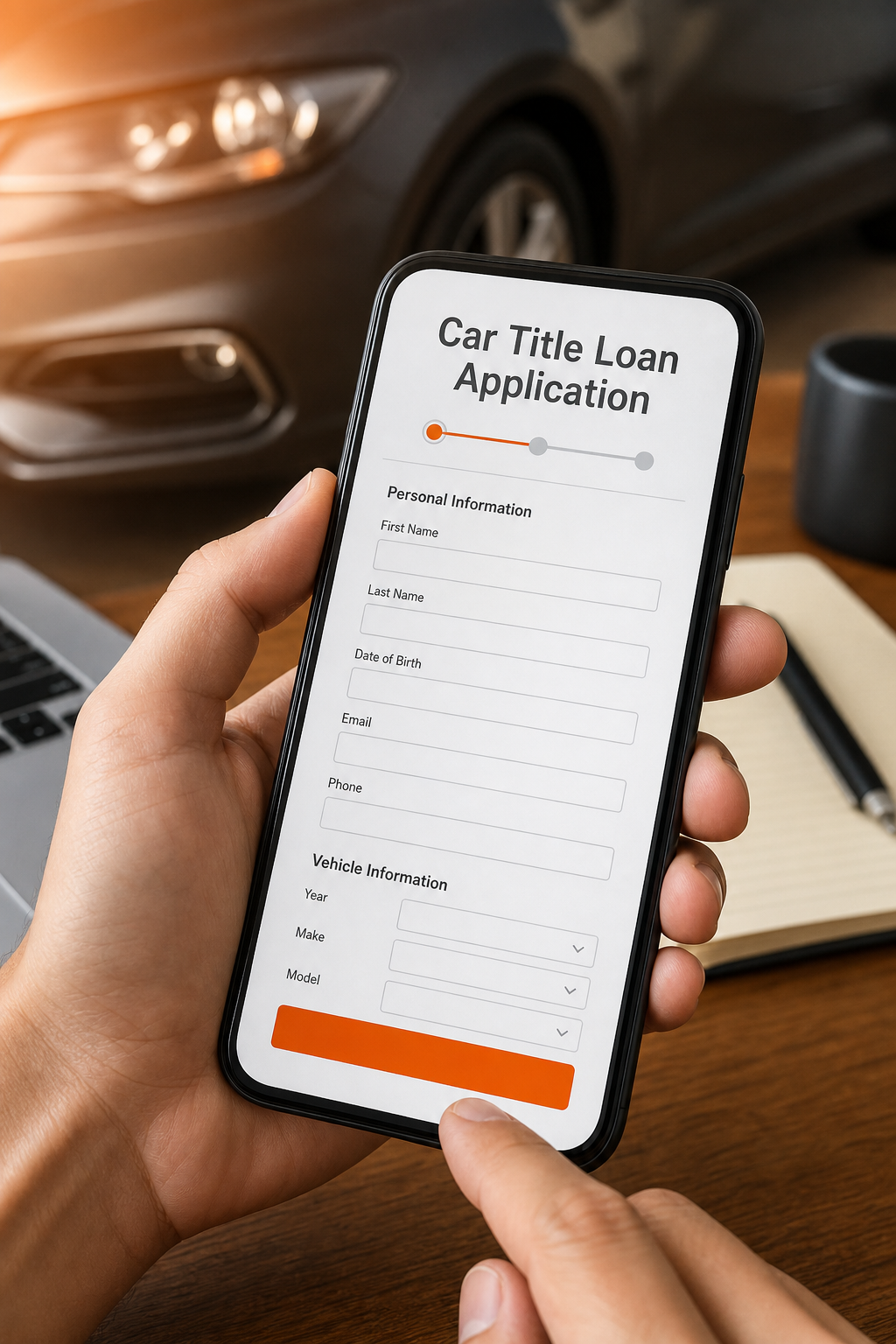
Online title loan lenders operate in most states where title loans are legal, and they’ve removed almost every friction point from the process. You can start an application from your phone in five minutes. Some lenders fund the same day. Bad credit is usually not a disqualifier because, again, the vehicle’s equity does most of the qualifying work.
The speed is real. The risk is also real. The Consumer Financial Protection Bureau has found that roughly one in five auto title loan borrowers have their vehicle seized after failing to repay. That number reflects what happens when a 30-day repayment window meets a borrower who was already short on cash to begin with.
Online lenders vary enormously. Some are licensed in their states, charge regulated rates, and offer installment repayment terms that stretch out over several months. Others operate on short 15-to-30-day windows with triple-digit APR and automatic rollover clauses that trap borrowers in a debt cycle. The application experience tells you nothing about which type you’re dealing with.
Online title lending is best treated as a fast-access channel, not a guaranteed safe one. Use it through a platform like EZ Car Title Loans that pre-vets lenders and posts clear terms, rather than responding to a random search result or unsolicited offer. The difference in terms you get can be significant.
5. Storefront Title Loan Companies , In-Person Options in Legal States
Brick-and-mortar title loan stores still process a large share of title loans in the US. Companies like LoanMax and ACE Cash Express operate physical locations in select states where title loans are legal. You bring your vehicle, your title, a government-issued ID, and proof of income, and you leave with cash, often the same day.
The in-person model has a real advantage for borrowers who want to ask questions and understand exactly what they’re signing before they commit. A storefront associate can walk you through the repayment schedule, explain rollover policies, and clarify what happens if you miss a payment. That human interaction can matter when the stakes include your vehicle.
Title loans are legal in roughly 27 states, and storefront availability varies significantly by location. ACE Cash Express, for example, offers title loans in Arizona, Oregon, and parts of Texas, with loan amounts from $100 to $5,000 depending on the state. LoanMax operates across multiple states with amounts up to $10,000 where available. Both companies are upfront that you keep driving your car while repaying.
The downside of the storefront model is availability. If you don’t live near a participating location, this option simply isn’t accessible. Storefronts also tend to have limited hours compared to an online application you can start at midnight. And the APR reality is no different from online lenders: storefront title loans can still carry high rates, so you need to read every disclosure before signing.
Think of the storefront option as best for borrowers who are uncomfortable with an entirely digital process and want someone physically present to explain the terms. If you’re in a legal state and a location is nearby, the in-person review step is a reasonable safeguard.
6. Peer-to-Peer and Marketplace Lenders , Alternative for Thin Credit Files
Peer-to-peer (P2P) and personal loan marketplace lenders don’t issue title loans in the traditional sense. What they offer instead is a potentially cheaper path to cash for borrowers with thin or damaged credit files who would otherwise feel forced into a high-APR title loan.
These platforms match borrowers with individual investors or a pool of lenders. Because they’re assessing risk across a large network, some are willing to approve borrowers that a single bank would reject. APR on marketplace personal loans typically runs between 18% and 35.99% for subprime borrowers, which is far below the 200, 400% APR range associated with short-term title loans.
The trade-off is that these loans are usually unsecured. Your vehicle is not on the line. But that also means you need to meet a minimum credit threshold to qualify at all. Most P2P lenders want a score of at least 580, 600, and some require higher. If your score is below that range, a marketplace lender won’t help you right now.
For borrowers whose credit is borderline but not completely collapsed, this category is worth a 10-minute application before committing to any vehicle-secured loan. Losing your car to a repossession because you couldn’t make a 30-day payoff has consequences that extend well beyond the loan itself. An unsecured installment loan at 30% APR with a 24-month term is painful, but it doesn’t put your transportation at risk.
If you own recreational vehicles or are exploring ways to put financed funds toward experiences, platforms like Vroom8 show how the broader vehicle economy works across rental and adventure markets globally. Understanding what your vehicle assets are worth and how they’re used is relevant context whether you’re borrowing against them or renting others.
How to Choose a Title Loan Option When You Have Bad Credit
Bad credit narrows your options, but it doesn’t eliminate them. The question is which type of lender fits your specific situation right now.
A few rules of thumb that apply across all of these categories:
- Always ask for the APR in writing before signing, not just a monthly fee percentage. A 25% monthly fee equals 300% APR.
- Check whether your state allows title loans at all. Laws vary sharply, and some states prohibit them entirely.
- If a lender advertises “no credit check” but also promises a low rate, read the fine print twice. Low APR on a no-credit-check title loan is possible through a platform like EZ Car Title Loans but uncommon elsewhere.
- Ask specifically about rollover policies. If you can’t pay in 30 days, does the loan automatically roll over with added fees? That clause has trapped a large share of title loan borrowers in escalating debt.
The right answer depends on your credit score, your state, how fast you need the money, and how confident you are in repaying by the due date. Start with the option that has the lowest APR you can actually qualify for, and only move toward a higher-rate product if the other doors are genuinely closed.
FAQ
Can I get a title loan with really bad credit?
Yes, in most states where title loans are legal. Title lenders primarily look at your vehicle’s value and your ability to repay, not your credit score. A borrower with a score below 500 can still qualify if the car has enough equity and the state permits title lending. Platforms like EZ Car Title Loans connect you with lenders that use equity as the main qualification factor. Approval is not guaranteed, but bad credit alone is rarely the sole disqualifier.
What happens if I can’t repay my title loan?
If you default, the lender has the legal right to repossess your vehicle. The CFPB has documented that approximately one in five title loan borrowers lose their car this way. Before missing a payment, contact your lender immediately. Some lenders will work out a modified repayment plan. Avoid rolling the loan over repeatedly, since rollover fees can push your total cost well above the original loan amount.
How much can I borrow with a car title loan and bad credit?
Most title lenders offer between 25% and 50% of your vehicle’s current market value. So a car worth $8,000 might support a loan of $2,000 to $4,000. EZ Car Title Loans connects borrowers with lenders offering amounts from $500 to $55,000, depending on the vehicle and the lender. Your state may also cap the maximum loan amount, so check your state’s rules before applying.
Do title loans affect my credit score?
Usually not, in either direction. Most title lenders don’t run a hard credit inquiry when you apply, so your score won’t drop from the application. But they also don’t report on-time payments to the credit bureaus, so a title loan won’t help you rebuild credit either. If you want a borrowing option that reports positive payment history, a credit union secured loan or a marketplace personal loan is a better fit.
Are title loans legal in every state?
No. Title loans are legal in roughly 27 states. Other states prohibit them outright or have regulations that effectively make them unavailable. Some states have “loophole” structures where lenders operate under slightly different licensing frameworks. Before applying, confirm that title loans are permitted where you live. Your state’s financial regulatory agency website is the most reliable place to check current rules.
What documents do I need for a car title loan?
You typically need a lien-free vehicle title in your name, a government-issued photo ID, proof of income (pay stubs or benefit statements), and proof of residence. Some lenders also require proof of insurance. The title must be clear, meaning no outstanding auto loan balance against the vehicle, in most standard title loan programs. Bring the vehicle itself so the lender can assess its value.
Conclusion
If you need a loan against your vehicle and bad credit is part of your reality, start with EZ Car Title Loans. The platform connects you with licensed lenders, posts transparent APR ranges, and lets you keep driving during repayment. Whatever path you choose, get the full APR in writing and have a repayment plan in place before you sign. Check your eligibility at ezcartitleloans.com and know your numbers before you borrow.


