

If your credit score is low and you need cash fast, a car title loan can be one of the few doors still open to you. These loans use your vehicle as collateral instead of your credit history , which is exactly why so many lenders advertise them as “no credit check.” But as our research found, only a fraction of lenders actually spell that out, and almost none publish their APR ranges upfront. Here are the main types of title loan providers, what each one actually offers, and who each one is really for.
1. EZ Car Title Loans (Our Top Pick) , Transparent Process, Multi-State Access

EZ Car Title Loans is a multi-state platform that connects vehicle owners with licensed title loan lenders. It is not a direct lender itself , it matches you with partners based on your location and vehicle value. Loan amounts and APR rates vary by lender and state; repayment terms and any prepayment penalties are set by the matched lender, so review all terms carefully before signing.
What sets EZ Car Title Loans apart from most of the names on this list is transparency. The platform discloses how its matching process works and what factors lenders consider. Most competitors don’t share any of that publicly. You can start the application online in minutes, and same-day approval is available for qualified borrowers. You keep driving your car throughout the loan term , the lender holds a lien on your title, not your keys.
The platform works for cars, trucks, and motorcycles across multiple states, which gives it broader geographic reach than many competitors that operate only in one or two states. If you have bad credit or no credit history, the approval decision focuses on your vehicle’s equity, not your score. For a full breakdown of how the vehicle-equity-first process works, see EZ Car Title Loans’ bad credit title loan resource for what lenders actually look at when credit isn’t a factor.
One honest caveat: because EZ Car Title Loans is a broker rather than a direct lender, your actual rate and terms depend on which licensed partner is available in your state. APR and loan amounts vary by lender and state , not every applicant will qualify for the same terms.
2. Online-Only Title Lenders , Fast Same-Day Funding Without a Branch Visit
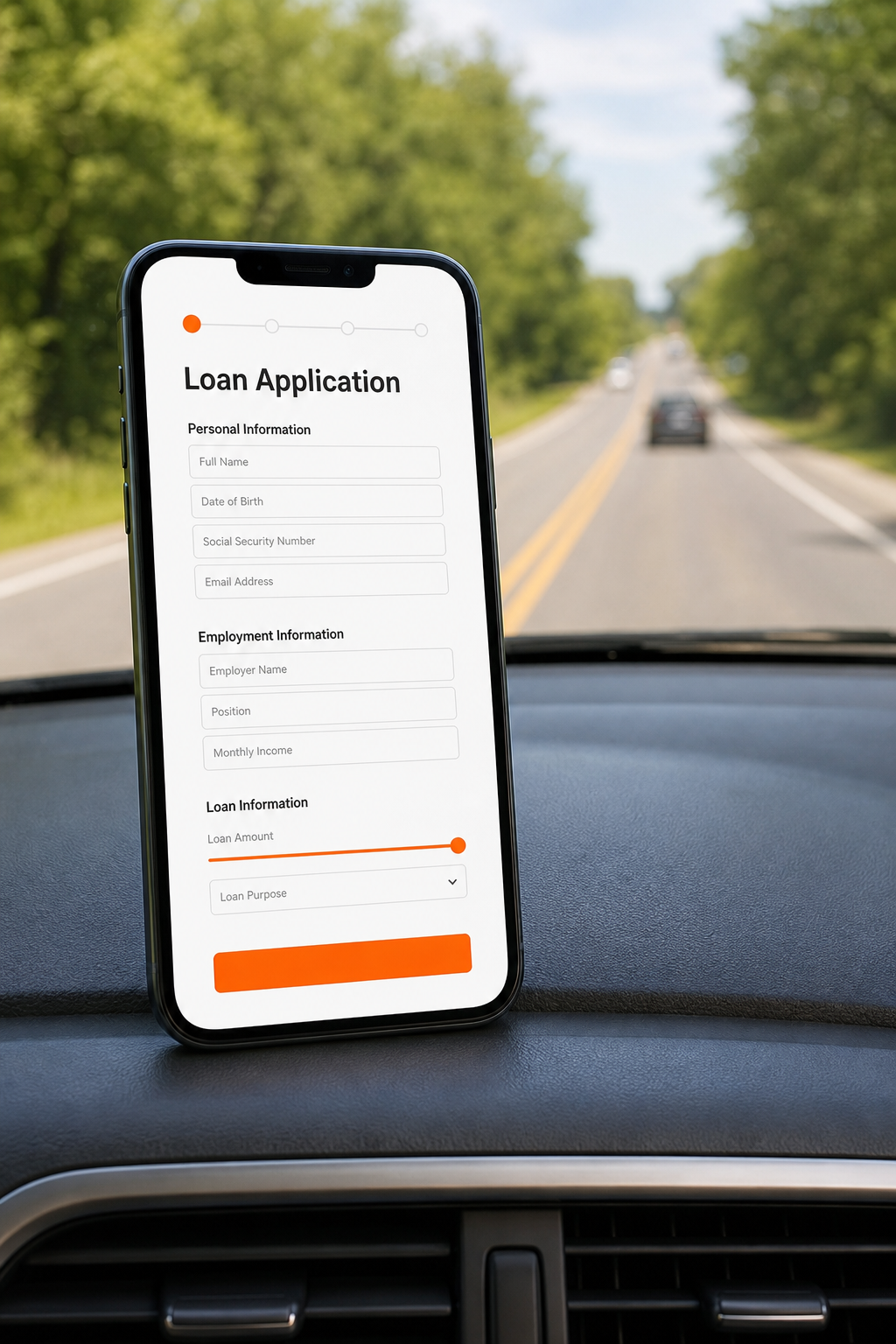
Online-only title lenders handle everything digitally , application, vehicle appraisal via photos, and fund disbursement by direct deposit or prepaid card. For borrowers who can’t easily get to a physical location, this is the most usable path. Some platforms can have money in your account within hours of approval.
The trade-off is that the vehicle appraisal is done remotely, which can affect loan amounts. A lender appraising your car from photos may offer less than one who sees it in person. Online lenders also vary widely on transparency. Our research found that many advertise “no credit check” without publishing any APR range, maximum loan amount, or fee structure. The FTC notes that lenders are legally required to disclose the finance charge and APR in writing before you sign , so if a lender won’t show you that upfront, that’s a flag.
Online title lending works best if you’re comfortable with a fully digital process and you have clear photos of your vehicle ready. Compare at least two or three platforms before committing, and look specifically for published APR ranges and repayment terms. If a site only tells you to “apply now to see your rate,” treat that as a starting point, not a final answer.
3. Credit Union Title Loan Programs , Lower Rates for Members
Credit unions sometimes offer secured vehicle loans to members with rates well below what a typical title lender charges. If you’re already a member of a federal credit union, this is worth a phone call before you look elsewhere. Some credit unions specifically target borrowers with thin or damaged credit through small-dollar loan programs.
The catch is that most credit unions do run a credit check. They also tend to require membership, which often means you live or work in a specific area. Banks and credit unions generally don’t offer pure no-credit-check title loans. What they do offer can be meaningfully cheaper. A payday loan carries a much higher APR than a credit union small-dollar loan, which may carry an APR under 36%.
If you qualify for a credit union loan, take it over a traditional title loan. The rate difference is significant. If you don’t qualify , because of credit, income, or membership gaps , then a licensed title loan provider like EZ Car Title Loans becomes a more realistic option, with the understanding that you’ll pay more for the flexibility.
4. Storefront Title Loan Chains , In-Person Process With Physical Inspection
Storefront lenders have physical branches where a staff member inspects your vehicle in person before approving a loan. The in-person appraisal often results in a higher loan offer than a photo-based online process, because the appraiser can assess condition directly. Many storefront chains also accept walk-ins and can fund the same day.
The vehicle title loan market has attracted significant regulatory attention over the years. A major rule covering payday and vehicle title loans was issued to address practices that make it harder for borrowers to repay and to establish disclosure requirements. Lenders operating at storefronts are subject to state licensing requirements as well, so the regulatory oversight is real , but it varies sharply by state.
According to Experian, title loans often carry a monthly finance fee as high as 25%, which works out to roughly 300% APR. That number is consistent across most storefront chains in states where title loans are legal. Storefront chains are convenient if you want face-to-face service, but don’t assume the in-person setting means lower rates. Always ask for the full APR and total repayment cost in writing before you sign anything.
Title loans are currently legal in roughly 27 states. If you’re unsure about your state’s rules, check with your state attorney general’s office , they track which lenders are licensed and what rate caps apply.
5. Title Loan Brokers , Compare Multiple Lenders in One Application
Title loan brokers submit your information to multiple licensed lenders simultaneously and return competing offers. The advantage is comparison without effort , you fill out one form and see what different lenders will offer based on your vehicle and location. EZ Car Title Loans operates this way: it’s a connection platform, not a direct lender.
Brokers are useful when you don’t know which lenders operate in your state or which ones are offering the best terms right now. They can surface lenders you wouldn’t have found on your own. The key question to ask any broker is whether they work exclusively with licensed lenders in your state, and whether any fees are charged to you (versus to the lender). A reputable broker doesn’t charge you to apply.
One thing to watch: some broker platforms have affiliate relationships with specific lenders and may present those partners first regardless of whether they offer the best terms. Look for platforms that show you multiple offers side by side so you can compare APR and total repayment cost directly.
6. Peer-to-Peer and Alternative Lenders , Non-Traditional Title Loan Options
Peer-to-peer (P2P) lending platforms connect individual borrowers with individual investors rather than institutional lenders. These platforms don’t typically offer traditional title loans, but they can be an alternative if you need cash and have less-than-perfect credit. The underwriting on P2P platforms often relies on banking history and income verification more than credit scores.
P2P lending platforms may offer faster funding than traditional banks but can carry higher interest rates compared to conventional personal loans. An important upside: many P2P lenders report payments to the credit bureaus, so paying on time can actually help build your credit score , something most title lenders don’t do at all.
P2P lending is worth considering if you have steady income but a poor credit score and want a loan that might also help your credit over time. It won’t suit everyone. Amounts available vary widely by platform and borrower profile, and approval is not as fast as a same-day title loan. Think of it as a middle option between a title loan and a bank loan.
7. Payday Loan Providers Offering Title Loan Products , Understand the Overlap
Some payday lenders have expanded into title loans, which means you might see both products offered side by side at the same storefront or website. The overlap creates confusion for borrowers, because the two products work differently despite looking similar at first glance.
A payday loan is unsecured , it uses your next paycheck as collateral, not your car. Title loans are secured by your vehicle. That distinction matters enormously in a default scenario. If you can’t repay a payday loan, the lender pursues collections or sues for the debt. If you can’t repay a title loan, the lender can repossess your car directly. Payday loans are also smaller in typical amounts, while title loans can go much higher depending on your vehicle’s value.
On a per-dollar basis, payday loans tend to be slightly more expensive. Average payday loan APR runs roughly 400% or higher, while title loans average closer to 300% APR. But the total dollars at risk with a title loan are higher because the loan amounts are larger , and the consequence of default is losing your transportation. If a lender offers both products, take time to understand which one you’re actually signing for before you agree to anything.
8. Pawn Shop Auto Title Programs , Last Resort Short-Term Option
Some pawn shops accept vehicle titles as collateral, similar to a standard title loan but through a pawn framework. In states like Georgia, these transactions are technically title pawns rather than title loans and operate under pawnbroker regulations rather than lending regulations. The distinction affects your legal protections significantly.
The risks are well documented: if your payment is due Thursday, the pawnbroker can legally repossess your car on Friday, without any additional notice period. A significant share of people who take out title pawns have their car repossessed, and if the pawnbroker sells it for more than you owe, they may keep the surplus. State pawnbroker interest rate caps vary and can translate to very high APRs on an annualized basis.
Pawn shops can provide cash the same day with minimal paperwork, which is why some borrowers turn to them in genuine emergencies. But the legal framework around title pawns typically offers fewer borrower protections than a licensed title loan from a state-regulated lender. Use this route only if other options have closed, and read the pawn contract word for word before signing.
9. State-Licensed Title Lenders With Rate Caps , Safer Borrowing in Regulated States
Some states impose meaningful rate caps on title loans. Those caps don’t eliminate the cost of borrowing, but they do limit how high the APR can go. Federal law, for example, caps the annual percentage rate at 36% for active-duty military and their dependents on title loans and other covered credit products , a hard ceiling that doesn’t apply to civilian borrowers in most states.
State-licensed lenders operating under rate caps are generally safer than unlicensed alternatives. Licensing means the lender has been reviewed by a state financial regulator, is subject to examination, and must comply with state disclosure requirements. To verify whether a lender is licensed in your state, visit your state attorney general’s website or the state department of financial institutions and use their license lookup tool.
The usable takeaway: if your state has a rate cap, you have built-in protection that limits the worst outcomes. If your state has no cap, you’re relying entirely on what the lender chooses to disclose and how carefully you read the contract. Either way, ask for the full APR, all fees, and the total repayment cost in writing before you commit. Licensed lenders are legally required to provide this information , if a lender won’t, walk away.
10. Personal Loan Lenders as Title Loan Alternatives , When to Consider Them
Personal loan lenders , including online lenders, banks, and credit unions , offer unsecured or secured loans that don’t require you to hand over your vehicle title. For borrowers with even a fair credit score, a secured personal loan can carry an APR well under 36%, which is dramatically cheaper than the 300% range common in the title loan market.
Experian’s breakdown of secured loans versus title loans puts it plainly: a secured personal loan from a bank or credit union typically has a term of two to five years, charges less than 36% annual interest, and requires a credit check and income verification. A title loan typically has a 30-day term, may charge the equivalent of 300% interest, and can include automatic rollover features that trap borrowers in escalating debt.
The credit check requirement is the main barrier. If you’ve been turned down for a personal loan, a title loan may be your most accessible option right now. But if you can qualify for even a bad-credit personal loan at 30% to 36% APR, it’s worth taking that over a title loan , you keep clear title to your car and avoid repossession risk entirely. Once you’ve repaid any title loan, using that payment history to work toward a better credit profile opens up cheaper options going forward.
What to Look For Before Choosing a Title Loan Provider
Before you apply anywhere, run through these specific questions. The answers separate responsible lenders from risky ones.
Our research looked at five U.S. title loan providers and found a consistent gap: most don’t publicly disclose APR ranges, funding speed, or maximum loan amounts. The providers that do publish this information upfront , EZ Car Title Loans is one , give you a real baseline for comparison before you invest time in an application. Any lender that won’t show you the APR before you apply is asking you to commit without enough information to make a sound decision.
One more thing worth checking: your vehicle’s current market value. Lenders typically offer 25% to 50% of that value. Look up your car’s estimated value using an automotive valuation tool before you apply so you have a realistic sense of what loan amount to expect. Going in with that number means you won’t be surprised by a lower offer, and you’ll be in a better position to push back if something seems off.
Frequently Asked Questions
Can I really get a title loan with no credit check?
Yes, many title loan lenders approve borrowers without running a traditional credit check. Because the loan is secured by your vehicle’s title, lenders focus on your car’s value and your ability to repay rather than your credit score. Some lenders may do a soft check to verify identity, but that typically doesn’t affect your score. Always confirm the lender’s credit check policy before applying.
What do I need to qualify for a title loan?
Most title loan lenders require a vehicle title in your name (lien-free or with equity), a valid government-issued ID, proof of income, and proof of residency. You generally need to be at least 18 years old. Some lenders also require proof of insurance and a brief vehicle inspection. Requirements vary by lender and state, so check with your specific provider.
How much can I borrow against my car?
Title loan amounts typically range from 25% to 50% of your vehicle’s current market value. The actual amount you may qualify for depends on the lender and your state. EZ Car Title Loans connects borrowers with lenders, though the actual offer depends on your vehicle’s condition and your lender’s assessment.
What happens if I can’t repay my title loan?
If you default, the lender can repossess your vehicle. Repossession can happen quickly after a missed payment , in some states with little or no advance notice. Once repossessed, the lender can sell the car. Depending on your state’s law, you may still owe any remaining loan balance after the sale. If you’re struggling to pay, contact your lender early to discuss options before missing a payment.
Are title loans legal in my state?
Title loans are currently legal in roughly 27 states. Several states have banned them outright or imposed rate caps that make the traditional title loan model unworkable for lenders. Some states allow lenders to structure the loans differently to get around restrictions. Check with your state attorney general’s office or state financial regulator to confirm current rules where you live.
Will a title loan affect my credit score?
In most cases, no , in either direction. Most title lenders don’t run a hard credit inquiry when you apply, so your score isn’t dinged. They also typically don’t report payment history to the credit bureaus, so on-time payments won’t build your score. Default and collections can eventually appear on your report, but standard title loan repayment usually has no credit impact at all.
Conclusion
For most borrowers researching a title loan with no credit check, EZ Car Title Loans is the clearest starting point , published APR range, multi-state access, no prepayment penalties, and a straightforward online process. Before you commit to any lender, get the full APR and total repayment cost in writing, confirm the lender is licensed in your state, and make sure you have a realistic plan to repay on time. Ready to see what your vehicle qualifies for? Start your application at EZ Car Title Loans and get a free estimate in minutes.


